The position of women in business and society is undergoing dynamic development, yet persistent stereotypes and expectations continuously create pressure. Today, women are highly educated, ambitious, and ready to lead. However, alongside managing teams or companies, they often bear a disproportionately large responsibility for running the family.
This phenomenon, known as “mental load,” involves continuous organizational, emotional, and logistical work in the private sphere. Although it remains invisible to the business environment, it significantly impacts women’s professional performance.
The connection between career advancement and personal life is clearly illustrated by data from a former survey, as reported by the New York Post. The results indicate that cognitive load, meaning the constant planning, organizing of family life, logistics around children or doctors, primarily rests on the shoulders of women in Slovakia.
Managing a household in parallel with a full-time job leads to exhaustion. As a result, women often lack sufficient energy to invest in networking, strategic innovations, or career advancement.
Pressure to Perform and Barriers to Career Advancement
Practical experience shows that despite declared equal opportunities, women in business face specific challenges already in the communication and defense of their decisions. The historical setup of management positions still subconsciously shapes the expectations of those around them.
“Based on our own experiences, as well as the experiences of our members, sympathizers, and conversations with women in various positions, we can confirm that women, regardless of whether they operate at lower or higher management levels, often feel significant pressure to perform and a need to constantly prove their abilities,” states Ivana Kondášová, director of the Association of Businesswomen and Managers.
Ivana also adds that they encounter challenges in the area of respect, for example, when delegating tasks or leading a team.
“In professional communication, more often than men, they experience situations where their proposals are rejected, underestimated, or they are interrupted. Their contributions are sometimes perceived as less valuable compared to identical proposals from male colleagues,” she clarifies.

Young women lack experience, older women are “out”?
Kondášová further highlights the results of their association’s extensive questionnaire, completed by 835 respondents, thereby refuting the myth of an absence of barriers. According to her, most women have personal experience with obstacles that slowed their career growth.
Among the most common barriers in the workplace are the expectation that women will primarily go on maternity leave, traditional gender role divisions, and the negative perception of women in high positions.
However, a significant factor is also lower self-confidence and insufficient support from their surroundings. The survey also revealed an interesting impact of age on the perception of competencies, which the association’s director concludes with the words:
“Younger women tend to be perceived as less competent for managerial and executive positions, while older women, despite their experience and results, face lower attractiveness in the labor market.”
As a solution, based on the survey, Kondášová suggests greater work flexibility, availability of preschool facilities, stronger support from partners, highlighting female role models, and open cooperation between men and women.
Male Domain vs. Fair Environment
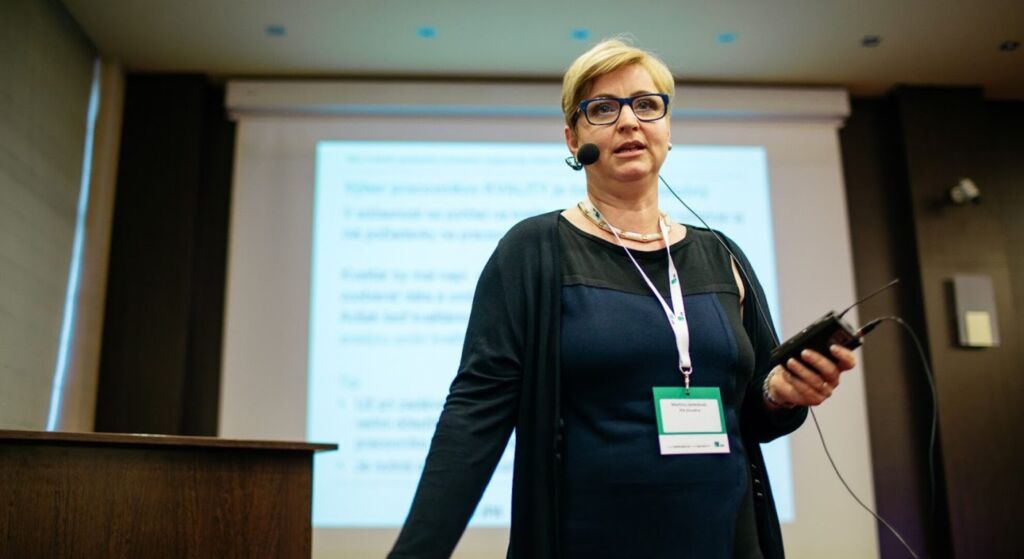
In sectors traditionally perceived as male domains, women’s success depends primarily on the internal culture of companies. As Martina Jankolová explains, in practice, we can identify two types of companies. Martina Jankolová, in practice, we can identify two types of companies.
The first are those where technological sectors remain a closed male domain. The second are companies that have integrated diversity and inclusion directly into their corporate culture.
According to Jankolová, these progressive organizations are characterized by five clear pillars:
- they have a transparent selection process system regardless of gender – skills, knowledge, and abilities are important
- they ensure transparency in promotion procedures – clear criteria and processes for professional growth regardless of gender
- they ensure transparency in wage policy regardless of gender
- they support the equal involvement of women in technological projects, both as participants and project leaders
- they support flexibility in women’s working hours
5 Practical Principles for Successful Female Leaders
For leaders themselves, who face high performance pressure, Jankolová recommends implementing 5 basic points into their daily functioning, which have proven effective in her practice:
- ease in functioning (understanding that no woman is perfect),
- effective weekly planning (not day-to-day),
- consistent delegation of tasks at work and in the family,
- active care for mental health (resilience)
- open, assertive communication of one’s needs with others.
From Harmonizing Women to System Transformation
A key shift in the discussion is the rejection of the thesis that combining family and career is exclusively a women’s problem. Eurofound (2023) statistics state that over 40% of European employees perceive work-life conflict, with the burden still unevenly distributed. state that more than 40% of European employees perceive a conflict between work and family, while the burden is still unevenly distributed.
Moreover, pressure is intensifying due to changes in the technological world and on social media where children are growing up, requiring a more intensive and active presence from both parents.
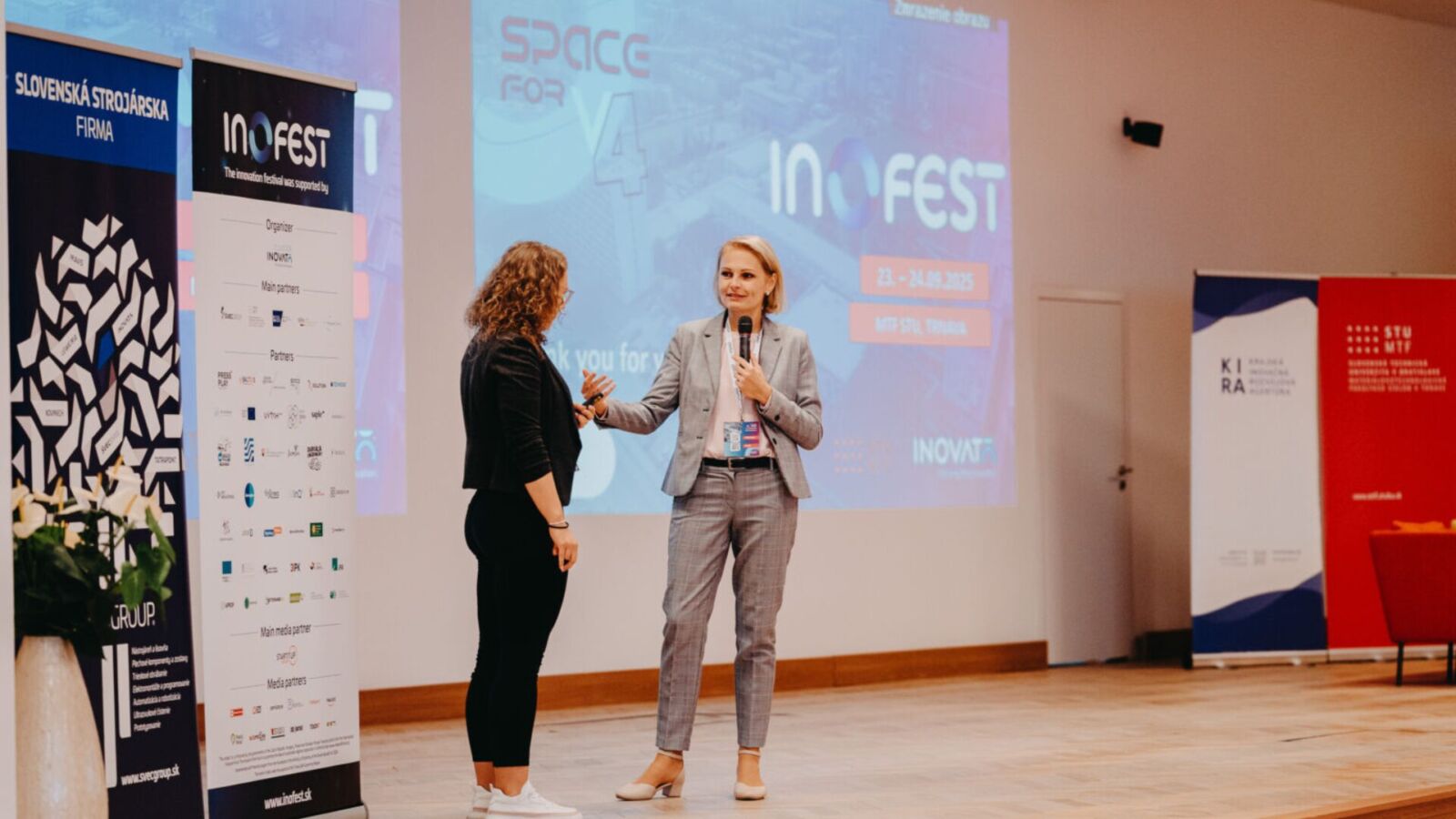
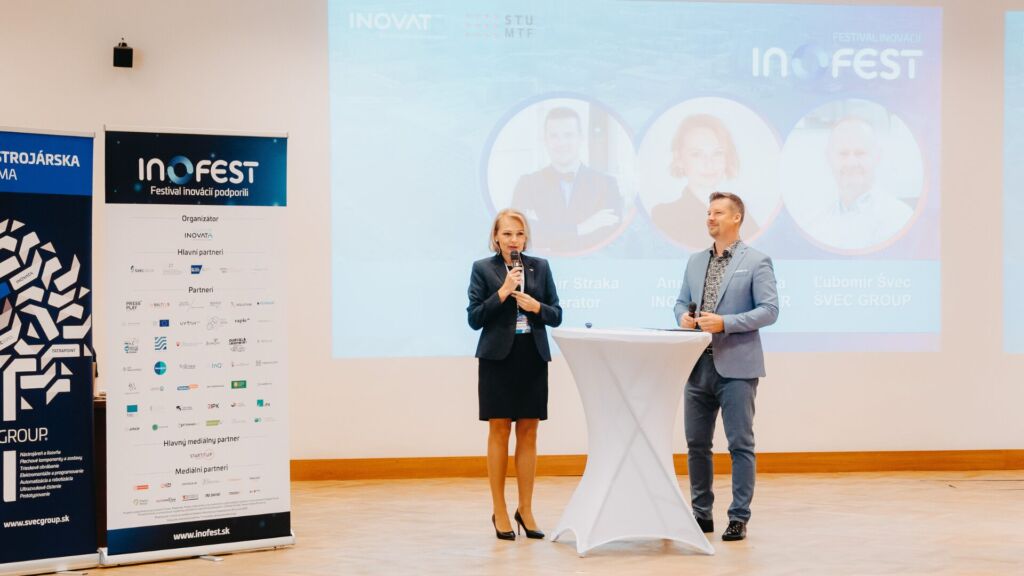
“The topic of balancing family and work life resonates ever more strongly, and it somewhat bothers me that it is primarily seen as a challenge for women. I would like us to finally get rid of this ingrained stereotype and start talking about conditions for parents regardless of gender. Flexibility alone is not enough if it is not accompanied by a culture where both men and women can use it equally without fear of professional stigmatization,” emphasizes Anna Čaplovičová, Executive Director of INOVATO.
Čaplovičová strictly rejects the approach of looking for faults or shortcomings on the part of women:
“Women do not need special safety nets, extra preparation, or some kind of ’empowerment packages.’ What they truly need is an environment that does not hinder them. I am talking about an environment that considers the diversity of needs, life situations, and talents, regardless of gender. When fair conditions are set, women excel in innovation and research just as much as men. This is also confirmed by data: McKinsey studies have long shown that teams with higher gender diversity achieve better innovative results. The problem is not with women – it is with the system. And if we want real change, it’s not enough to work on women. We need to work on the system.” “
Psychological Safety as the Foundation of Innovation
In the context of the technological revolution, the female element in management takes on an entirely new meaning. Analytical tasks, data processing, and performance can be fully automated by artificial intelligence. However, what truly makes teams successful, according to Čaplovičová, are qualities that were previously underestimated in the corporate environment.
Gallup has long documented that female-led teams exhibit higher employee engagement. Research shows that female managers more frequently conduct regular progress discussions, recognize people’s strengths, and create an environment of psychological safety. These, according to Čaplovičová, are the factors that determine whether an innovative idea will even emerge and whether someone will dare to voice it.
“But I admit, the framing of this topic somewhat tires me,” Čaplovičová states. “We are still talking about what women ‘bring extra,’ as if the male standard were the basic norm and women had to justify their place at the table. I think it’s time to move this debate elsewhere,” he adds.
Mixed teams do not benefit from being “politically correct,” but from a combination of talents, different perspectives, and strengths.
The Paradox of the AI Era
Today’s world, full of geopolitical instability, climate crisis, and technological revolution, increasingly shows that the future is not in differentiation, but in cooperation. Mixed teams do not benefit from being “politically correct,” but from a combination of talents, different perspectives, and strengths.
In this context, Čaplovičová points out an interesting paradox of our time:
“Qualities long considered weaknesses in women – empathy, the ability to read relational dynamics, intuition in working with people, or an orientation towards long-term impact – are proving to be key in the era of artificial intelligence. AI can automate performance, analytical processes, and even data-driven decision-making. But it cannot automate emotions, human judgment, trust, and relationships. Precisely what was long underestimated is becoming irreplaceable.”
An innovative environment that ignores these inherent qualities, she argues, does not just lose some “female element.” She concludes that such an environment loses precisely those abilities that will determine who will truly be relevant in the market in the future.
TEXT: Natália Stašíková
PHOTO: INOVATO, IPA

