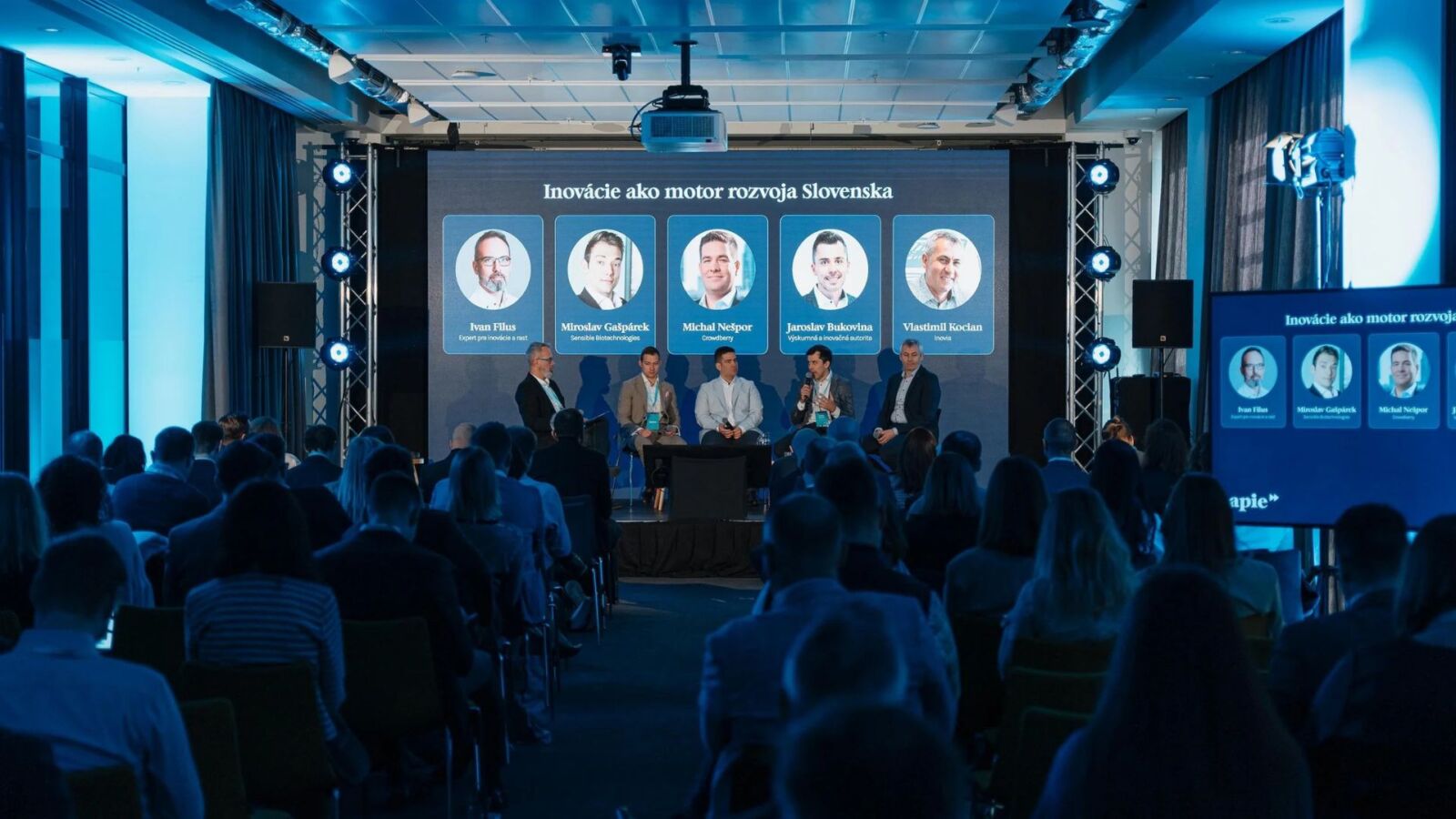
Most companies today “collaborate” with startups. They organize hackathons, set up accelerators, or allocate capital for investments. The result? After two years, they have a few pilot projects on their hands and almost nothing in actual practice.
Why isn’t it working? Because these models are set up for something else—an accelerator develops the startup, and a fund wants a financial return. However, few address the most important thing: how to get new technology directly into production or into a product. We talked about how to change this with Jaroslav Bukovina from SAPIE.
What is the Venture Client Model?
It might sound complicated, but it’s actually quite simple: Instead of investing in a startup, you simply become its customer.
“The company asks: We have a specific problem. Is there a startup that can solve it better and faster than we can ourselves? If so, we buy their solution, test it in a pilot, and if it works, we deploy it,” explains Jaroslav. No complex legal contracts regarding shares, no waiting three years for a result. The entire cycle can take just 3 to 6 months.
Barriers to innovation in Slovakia
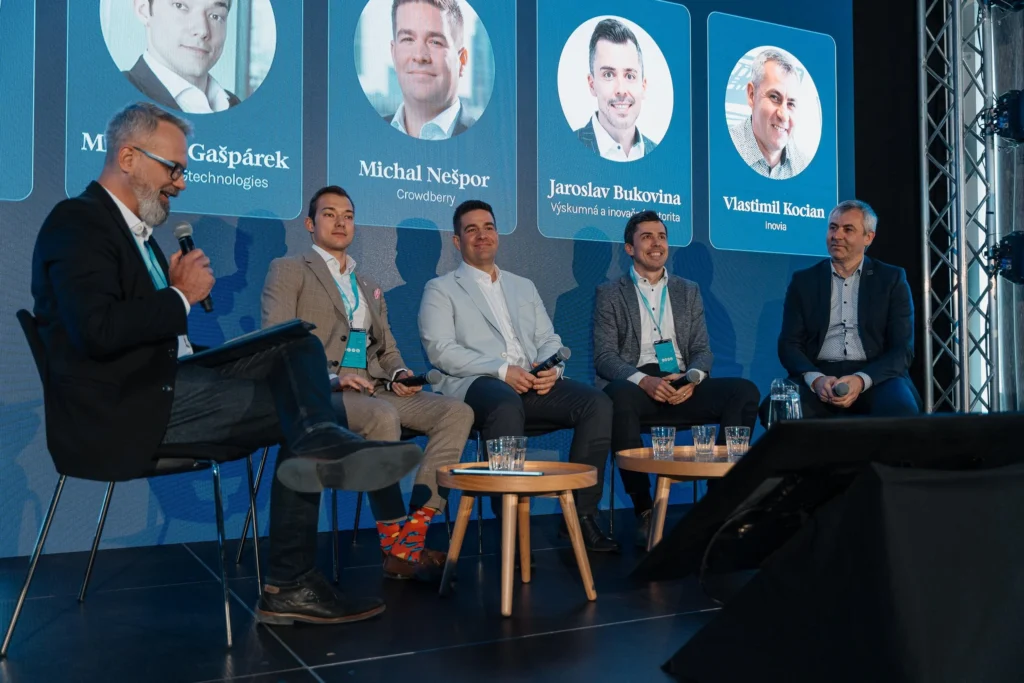
According to Jaroslav, there are two barriers. The first is structural. Many of our companies are subsidiaries, and innovation decisions are made at headquarters. “However, that is also an opportunity,” says Jaroslav. “If a manager in Slovakia understands how Venture Clienting works and sells it to headquarters, they can open the door for the entire group.”
The second barrier is psychological. You often hear: “We are too big a company to depend on a small startup.” But this isn’t about dependence; it’s about testing. A pilot with a startup is cheaper and faster than internal development. If it doesn’t work out, you stop it without major losses.
“If a manager in Slovakia understands how Venture Clienting works and sells it to headquarters, they can open the door for the entire group.” – Jaroslav Bukovina.
Learn from the best: Summer School with BMW Garage
If this approach interests you, a unique opportunity is coming as part of the SAPIE program. Summer School with Gregor Gimmy. Gregor is no theorist. He is the person who, in 2014 at BMW, figured out how to adopt startup technologies faster and built the famous BMW Startup Garage.
“Gregor made mistakes that we can learn from. Course participants won’t be solving fictional textbook examples; they will be working on their real corporate problems,” adds Jaroslav.
Who is the course for?
- Managers in large companies who already have innovation programs but feel that the results do not match the investments.
- People from medium-sized companies (industrial R&D centers, family businesses) who know that startups can help them but have no idea how to start.
Networking that makes sense: R&D Club 4+
Innovation doesn’t happen in isolation. That’s why the R&D Club 4+ was created, of which Jaroslav is a part. It is a space for leaders of industrial centers in Slovakia who often deal with the same problems—from finding talent to connecting research with business.
R&D Club 4+ works with a simple observation: leaders of industrial research and development centers in Slovakia do not know each other, partly due to the situation mentioned in question no. 2, where the local R&D center is a branch of a foreign headquarters. Yet everyone deals with similar problems—how to acquire talent, how to link research with business, etc.—but they solve them alone, without sharing experiences.
The club is a space where these companies can talk openly in a smaller community, where they can also discuss what didn’t work.
“The club is a place where you can openly say what didn’t work. You’ll find out how another company solved a technical problem, or you might find a partner for a joint project,” says Jaroslav.
For an engineer or developer in practice, this means concrete things: learning how a similar company in another industry solved a technical problem, finding a partner for a joint project, or simply meeting someone who has the same questions. You can find more information about the last event at this link.
The next R&D Club 4+ event will take place on June 4th and 5th. The event organizers, the Research and Innovation Authority and the Slovak Alliance for Innovative Economy, will soon be promoting more about the event on their social media and website.
What is the vision?
“In three years, I would like to see at least ten Slovak industrial companies that have a functional and measurable cooperation program with startups. Not on paper, but in practice,” concludes Jaroslav Bukovina.
Venture Clienting is not about “playing” at innovation. It is a pragmatic tool to save time and money and gain access to cutting-edge technologies before the competition.
We will also discuss this topic with Jaroslav at our next webinar; you can register HERE.
TEXT: Natália Stašíková
PHOTO: SAPIE

